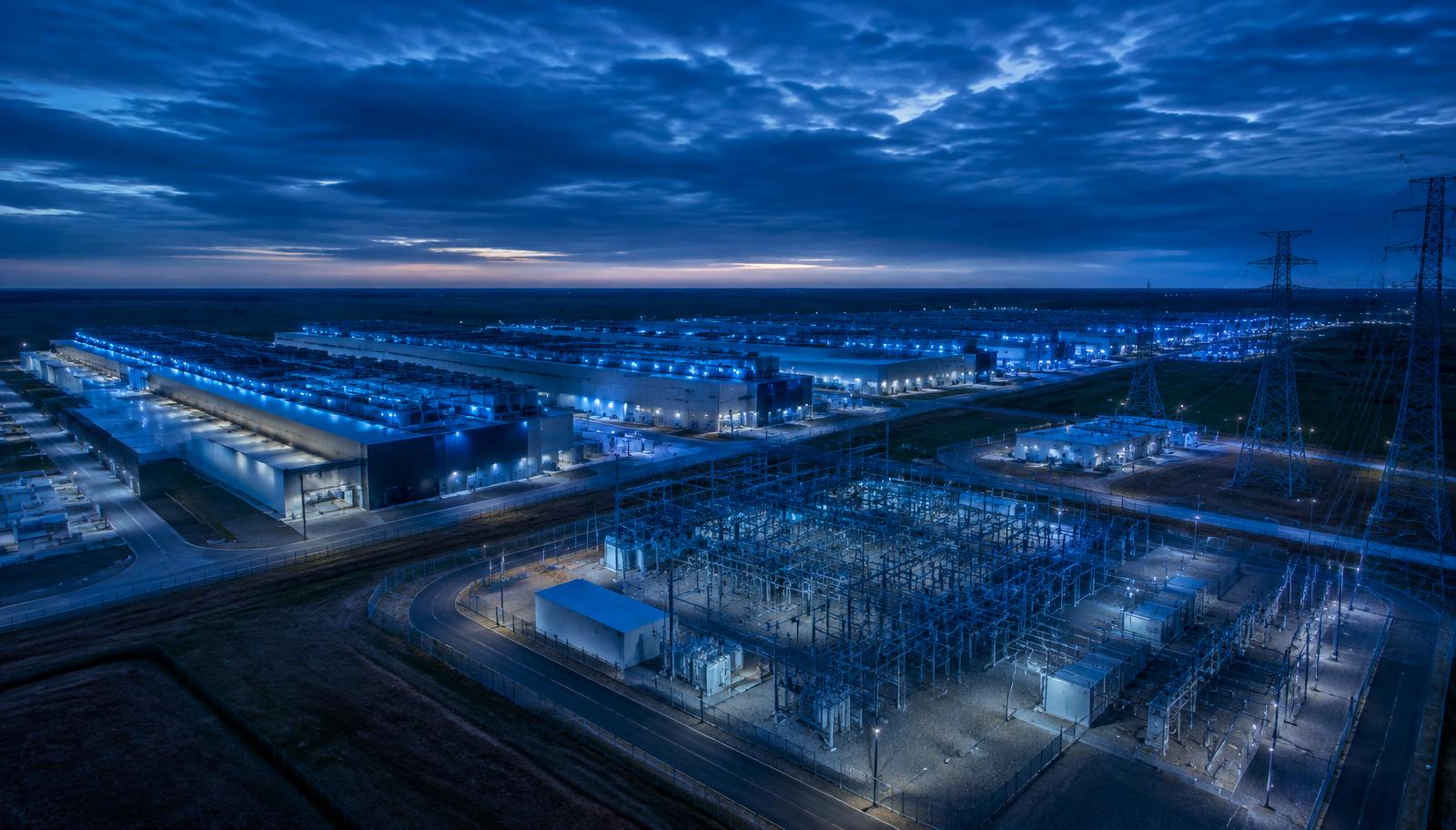
The relentless growth of artificial intelligence and cloud computing is pushing U.S. electricity demand to levels not seen in decades. Hyperscalers are building data centers at a record pace, but they cannot build the power grid required to support them. This creates an urgent and unprecedented need for specialized talent across the energy landscape. The most critical data center power jobs are not inside the data center fence, but outside it—in the utilities, independent power producers (IPPs), and development firms tasked with generating, transmitting, and delivering reliable power at massive scale.
The Unprecedented Scale of Demand
For the decade leading up to 2020, U.S. electricity consumption actually declined by 1%, according to Wood Mackenzie. Since 2020, it has risen approximately 7%. The primary driver is the voracious energy appetite of data centers. A 2026 report from Berkeley Lab, the United States Data Center Energy Usage Report: 2025 Update, projects that data centers could consume 11.8% of total U.S. electricity by 2030, with a reference case of 649 TWh. This represents a staggering increase from 2023, when the lab’s 2024 report found data centers used about 4.4% of the nation’s electricity. This forecast highlights a fundamental challenge: the existing grid was not designed for this concentrated, exponential load growth. Meeting this demand requires a new wave of infrastructure and the expert teams to build and operate it.
“The AI boom fuels unprecedented electricity demand. Hyperscalers can't build the grid alone, creating critical data center power jobs for specialized talent.”
The Generation Interconnection Bottleneck
Building new power plants is only part of the solution. Connecting them to the grid is a monumental challenge in itself. At the end of 2025, over 2,060 gigawatts of generation and storage capacity were actively seeking grid connection, according to Berkeley Lab's "Queued Up" report. This backlog creates a traffic jam of projects. The same report notes that most projects that apply for interconnection are ultimately withdrawn, and those that are built are taking longer on average to complete the necessary studies and reach commercial operation. This bottleneck is a direct constraint on data center growth. Hyperscalers require power on aggressive timelines that the current interconnection process struggles to meet. This reality elevates the importance of specialists in transmission planning, interconnection engineering, and regulatory affairs who can successfully navigate these complex queues.
Essential Data Center Power Jobs Beyond the Fence
While data centers hire their own facilities and electrical teams, the most acute talent shortages are in the power delivery ecosystem. These are the roles that enable the grid to expand. Key positions include Transmission Planning Engineers, who model future grid scenarios and design system upgrades. Substation Engineers are critical for designing and building the high-voltage infrastructure that steps down power for delivery. Interconnection Specialists manage the complex technical and administrative process of connecting new generation or large loads like data centers to the grid. Regulatory and NERC Compliance Managers are also in high demand. They ensure all assets comply with mandatory reliability and security standards, such as the NERC CIP standards (CIP-002 through CIP-014), where violations can carry significant financial penalties. These are the data center power jobs that form the backbone of the entire industry's expansion.
The Power Sector's Looming Talent Deficit
This demand for infrastructure is colliding with a tightening labor market. According to a Goldman Sachs Research estimate cited by Exelon's CEO in 2026, the U.S. power sector may need to hire approximately 750,000 additional workers by 2030 to execute the energy transition and meet new demand. The need for specialized engineering talent is particularly severe. The Bureau of Labor Statistics (BLS) projects that employment for electrical and electronics engineers will grow 7% from 2024 to 2034, with about 17,500 openings projected each year. More specifically, BLS projections show that the number of electrical engineers in electric power generation, transmission, and distribution is expected to grow about 13% from 2025 to 2035. With a median pay of $111,910 as of May 2024 for electrical engineers, competition for qualified individuals is fierce. Compounding this, the 2023 Energy Workforce Survey from CEWD and ScottMadden found that 56% of utility employees have less than ten years of service, indicating a generational shift and a loss of institutional knowledge at a critical time.
New Generation Meets Old Supply Chains
The industry is racing to add capacity. The U.S. Energy Information Administration (EIA) reported that 53 GW of new utility-scale generating capacity was added in 2025, the largest amount since 2002. Developers plan to add a record 86 GW in 2026, dominated by solar (51%) and battery storage (28%). Yet this rapid buildout is straining global supply chains for essential electrical equipment. A Wood Mackenzie analysis from August 2025 revealed 2025 supply deficits of 30% for power transformers and 10% for distribution transformers. Demand for power transformers has surged 116% since 2019, and the U.S. imports roughly 80% of its supply. This creates significant project delays and budget overruns. Companies now need sophisticated procurement, logistics, and project management leaders who can navigate these shortages, secure equipment, and keep complex construction schedules on track. These roles are just as vital as the engineering functions.
The Rise of Energy Storage Experts
Battery storage is emerging as a key technology to support both renewable integration and grid stability for data center loads. The growth is explosive. According to the EIA, a record 15 GW of utility-scale battery storage was added in 2025, with another 24 GW planned for 2026. By the end of 2025, the U.S. had 43.6 GW of operational battery storage, a figure expected to reach nearly 52 GW by mid-2026. Wood Mackenzie and the American Clean Power association (ACP) similarly found 18.9 GW of battery storage was installed across all segments in 2025, a 52% increase over the prior year. This rapid deployment creates demand for a new class of specialists. These include energy storage engineers, market modeling analysts who optimize battery dispatch, and control systems experts who integrate storage with the grid and data center operations. The CEWD/ScottMadden survey finding that emerging-technology jobs grew nearly fourfold between 2021 and 2023 underscores this shift. Expertise in battery storage is no longer a niche skill; it is a core requirement.
Partnering for Critical Talent
The historic expansion driven by data centers depends on a robust and growing power grid. Hyperscalers can write the checks, but they rely on utilities, IPPs, and developers to execute the vision. Success hinges on securing the highly specialized leaders and technical experts needed to plan, build, and operate this new infrastructure. The competition for these individuals—the people filling the most essential data center power jobs—is the defining challenge of this era. GridTal is a retained-only executive and technical search firm focused exclusively on U.S. power infrastructure. We partner with utilities, data center power teams, transmission developers, and generation and storage operators to find the talent that makes growth possible. Our retained model, where the engagement fee is credited to the final placement, ensures a dedicated and thorough search process. We present qualified candidates to solve your most critical hiring needs. If you are an employer facing these challenges, visit our Request Talent page. If you are a senior candidate in the power sector, we invite you to submit your Resume.
Sources
Berkeley Lab "Queued Up" (June 2026 edition); Berkeley Lab United States Data Center Energy Usage Report: 2025 Update (June 2026); U.S. Bureau of Labor Statistics (BLS) Occupational Outlook Handbook (May 2024) and employment projections; U.S. Energy Information Administration (EIA) data releases; Wood Mackenzie/American Clean Power (ACP) U.S. Energy Storage Monitor; Wood Mackenzie research (August 2025); Goldman Sachs Research estimate as cited by Exelon CEO (2026); Center for Energy Workforce Development (CEWD)/ScottMadden 2023 Energy Workforce Survey; North American Electric Reliability Corporation (NERC) Critical Infrastructure Protection (CIP) standards.
Related reading
See data center power recruiting and how we support hyperscalers.