Data center power glossary.
- Behind-the-meter (BTM) power
Generation located on the customer's side of the utility meter, serving the site directly instead of flowing through the grid first.
- Bridge power
Temporary onsite generation that powers a campus until its permanent grid connection is energized.
- Capacity market
A market where grid operators pay resources to be available to produce power in future years.
- Co-location (generation)
Placing a data center directly next to a power plant so the plant serves the campus with little or no use of the transmission grid.
- Commissioning
The process of testing and verifying that electrical and mechanical systems work as designed before operations begin.
- Critical IT load
The power drawn by servers, storage and network equipment, as opposed to cooling and building systems.
- Electric service agreement (ESA)
The contract under which a utility agrees to deliver power to a customer site, including capacity, ramp schedule and rates.
- Energization
The moment new electrical equipment is first connected to a live power source and put into service.
- Facilities study
The interconnection study that scopes, prices and schedules the specific equipment and upgrades needed to connect a project.
- Interconnection agreement
The contract between a project and the utility or grid operator that sets the terms, costs and schedule for connecting to the grid.
- Interconnection queue
The ordered list of generation, storage and large-load projects waiting for a utility or grid operator to study and approve their connection to the grid.
- Large load
A single customer, such as a data center campus, whose electricity demand is big enough to require special studies, tariffs or transmission upgrades.
- Large-load tariff
Utility rate terms written specifically for very large customers, often including minimum bills, long contract terms and collateral.
- Microgrid
A local power system with its own generation and controls that can run connected to the grid or on its own.
- N-1 contingency
A reliability standard requiring the grid to keep operating normally after the loss of any single major element.
- NERC CIP
The North American Electric Reliability Corporation's Critical Infrastructure Protection standards for securing grid assets.
- Point of interconnection (POI)
The physical location where a project's facilities connect to the utility's transmission or distribution system.
- Power purchase agreement (PPA)
A long-term contract to buy electricity, and often its environmental attributes, from a specific generation project.
- Protection and controls (P&C)
The relays, settings and control schemes that detect faults and isolate equipment to keep the power system safe.
- PUE (power usage effectiveness)
Total facility power divided by IT equipment power; a measure of data center energy efficiency.
- RTO / ISO
Regional transmission organizations and independent system operators that run the grid and wholesale power markets across multiple utilities.
- SCADA
Supervisory control and data acquisition: the systems that monitor and control electrical equipment remotely.
- Substation
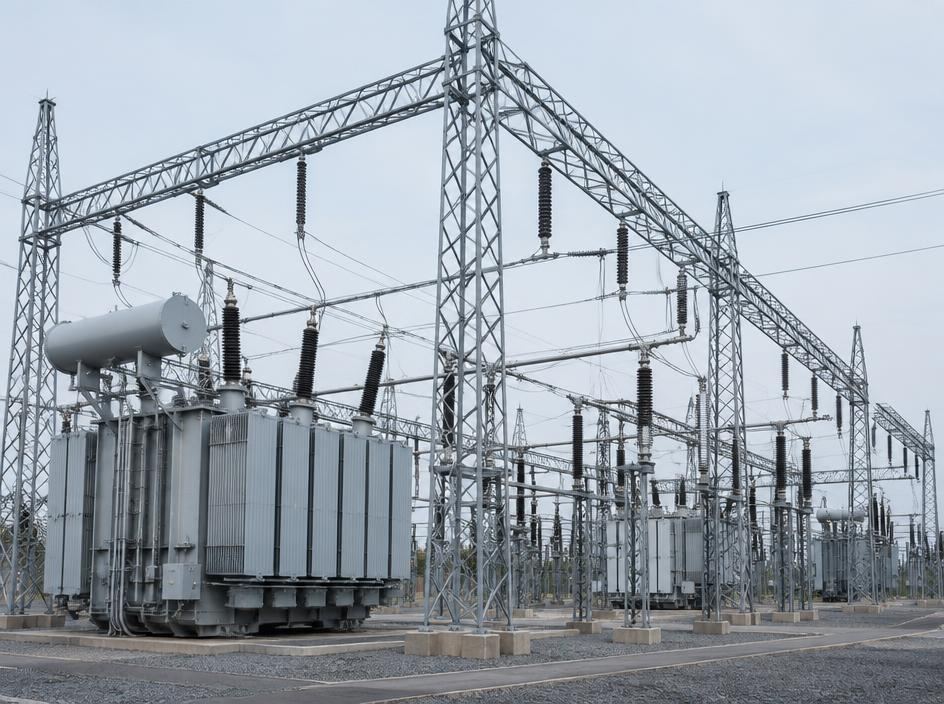
A facility that steps voltage up or down and switches power between lines, using transformers, breakers and protection equipment.
- System impact study
An engineering study that tests how a new project would affect grid reliability and identifies the upgrades needed to connect it.
- Transformer lead time
The time between ordering a power transformer and receiving it, which has stretched to multiple years for large units.
Hiring for one of these areas? Browse role guides or request talent.