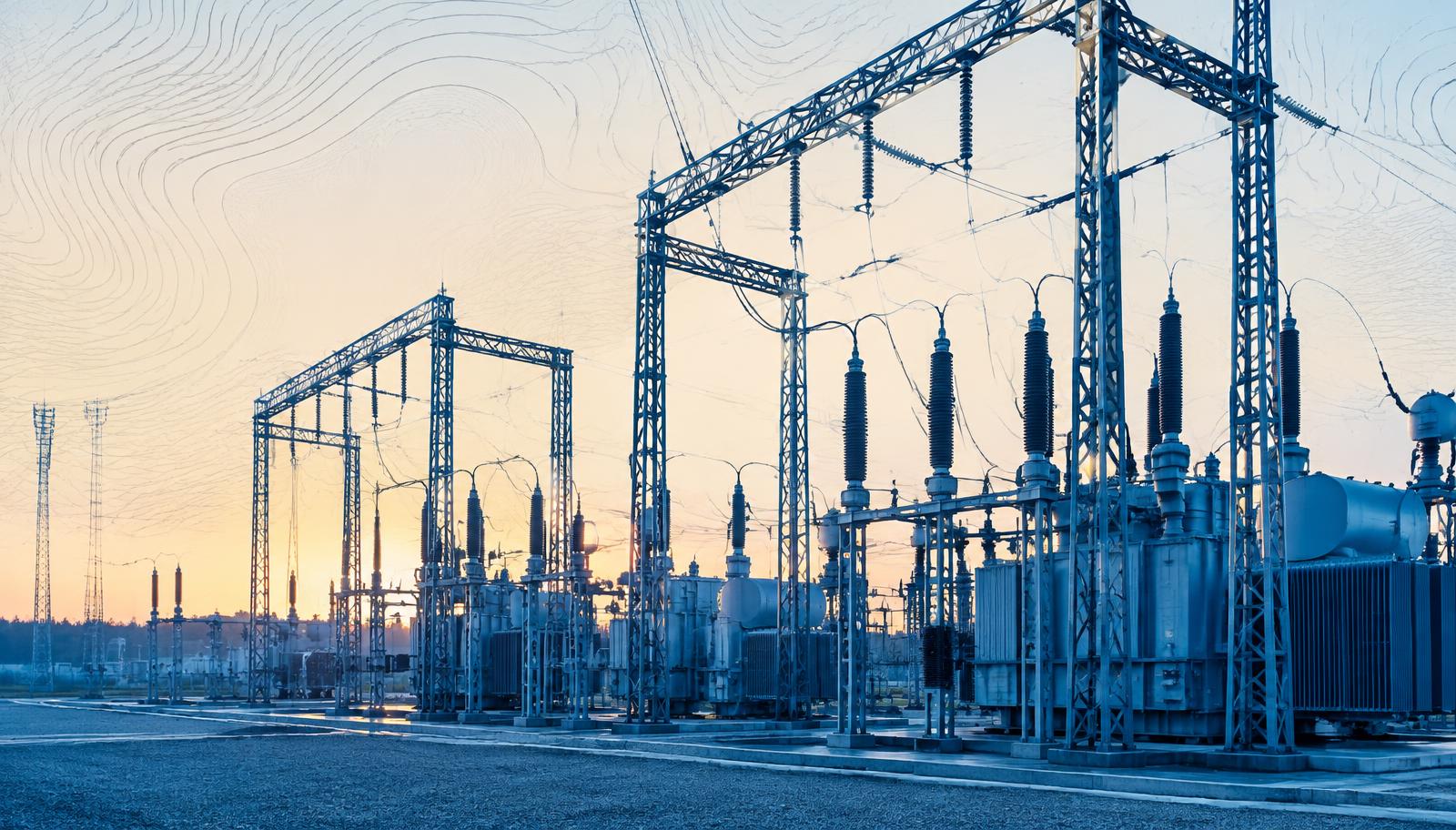
The American power grid is facing a period of unprecedented transformation. Massive injections of renewable generation and battery storage are colliding with explosive new load growth from data centers and electrification. At the center of this nexus is the substation, and by extension, the substation engineer. For hiring leaders at utilities, developers, and data center operators, a strategic approach to substation engineer hiring is no longer optional; it is the critical determinant of project success and system reliability in 2026 and beyond.
A Perfect Storm of Demand
The scale of the challenge is immense. The grid interconnection queue is overwhelmed with projects seeking to connect. According to Berkeley Lab's June 2026 "Queued Up" report, over 2,060 gigawatts of generation and storage capacity were actively seeking grid connection at the end of 2025. While most projects that apply are ultimately withdrawn, the report notes that built projects are taking longer on average to complete the necessary studies and reach commercial operation. The influx is already underway. The U.S. Energy Information Administration (EIA) reports that 53 GW of new capacity was added in 2025, the largest amount since 2002. Developers plan to add a record 86 GW in 2026, dominated by solar, battery storage, and wind.
“A perfect storm of grid demand and a strained talent pool makes strategic substation engineer hiring critical. This guide covers the market, pay, and timelines for 2026.”
Simultaneously, the demand side of the ledger is exploding. After a decade of relatively flat growth, U.S. electricity consumption has risen approximately 7% since 2020, according to Wood Mackenzie. A primary driver of this new demand is the proliferation of data centers. A June 2026 Berkeley Lab report on data center energy usage projects that these facilities could account for 11.8% of total U.S. electricity by 2030 in their reference case. This is a dramatic increase from the 4.4% of U.S. electricity data centers used in 2023. These dual pressures of generation and load all converge at the substation, placing immense strain on the engineers who design, build, and maintain them.
The Substation Engineer: A Role in Transformation
The role of the substation engineer has evolved far beyond physical layout and structural design. Today’s top engineers must be multifaceted experts, fluent in the digital and security layers that govern modern grid assets. Expertise in protection and control (P&C) systems is paramount, ensuring the grid can react instantaneously to faults and disturbances. This requires a deep understanding of relays, automation controllers, and the complex logic that keeps the system stable.
This role is also at the forefront of integrating new technologies. Battery energy storage systems (BESS) are a prime example. The EIA reported a record 15 GW of utility-scale battery storage was added in 2025, with another 24 GW planned for 2026. By mid-2026, operational U.S. battery storage is expected to be nearly 52 GW. Wood Mackenzie and the American Clean Power Association (ACP) confirm this trend, finding 18.9 GW of battery storage was installed across all segments in 2025, a 52% increase over 2024. Substation engineers are the ones responsible for safely and reliably interconnecting these complex assets, a task that requires specialized skills not found in general electrical engineering programs.
Furthermore, heightened security threats have made compliance with NERC CIP standards a non-negotiable aspect of substation design. Engineers must now incorporate both cyber and physical security measures from the ground up. A failure to comply with standards like CIP-002 through CIP-014 can result in significant financial penalties and pose a real threat to grid reliability.
The Talent Chasm: A Shrinking Pool for a Growing Need
While the demand for skilled substation engineers skyrockets, the available talent pool is struggling to keep pace. The Bureau of Labor Statistics (BLS) projects that employment for all electrical and electronics engineers will grow 7% from 2024 to 2034, which is much faster than the average for all occupations. However, a deeper look reveals a more acute problem for our sector. BLS projections show that electrical engineers specifically in electric power generation, transmission, and distribution are projected to grow about 13% from 2025 to 2035, nearly double the rate of the broader profession.
The overall workforce gap is staggering. A Goldman Sachs Research estimate, cited by Exelon's CEO in 2026, suggests the U.S. power sector may need approximately 750,000 additional workers by 2030 to manage the energy transition. This demand is hitting a workforce already in flux. The 2023 CEWD/ScottMadden Energy Workforce Survey found that 56% of utility employees have less than 10 years of service. The wave of retirements among experienced engineers has left a significant knowledge gap. This makes senior and principal-level engineers who can mentor junior staff and lead complex projects exceptionally valuable and incredibly difficult to hire.
Project Delays and the Supply Chain Squeeze
Compounding the human capital challenge are unprecedented constraints in the equipment supply chain. These are not minor inconveniences; they are fundamental roadblocks to project execution. A Wood Mackenzie report from August 2025 highlighted alarming supply deficits of 30% for power transformers and 10% for distribution transformers. Power transformer demand is up 116% since 2019, while the U.S. relies on imports for roughly 80% of its supply.
These long lead times directly impact the work of substation engineering teams. Projects are no longer linear. A design may need to be altered multiple times to accommodate available equipment. This reality demands a higher caliber of engineer—a designer who is also a creative problem-solver. The ability to vet alternative suppliers, validate different equipment specifications, and re-sequence engineering deliverables is now a core competency. Hiring leaders must seek out candidates who demonstrate resilience and adaptability in the face of these persistent supply chain disruptions.
Competing for Talent: Pay, Projects, and Purpose
In such a competitive market, compensation is a critical factor. The BLS reported a median pay of $111,910 for electrical engineers in May 2024. However, for hiring managers in the power sector, this figure should be viewed as a starting point, not a benchmark. Experienced substation engineers, particularly those with demonstrated expertise in P&C, system protection, BESS integration, or data center interconnections, command significant premiums.
Beyond salary, top candidates are weighing the entire opportunity. They are attracted to technically challenging projects that allow them to work on the most demanding grid projects in the country. Companies investing in modernizing their systems and adopting new design tools are more attractive than those perceived as lagging. The opportunity to mentor junior engineers or have a clear path to a Subject Matter Expert role can also be a powerful draw for senior talent. Culture matters. Engineers want to work in an environment that respects their expertise and empowers them to solve problems, not one that buries them in bureaucracy.
Best Practices for Substation Engineer Hiring in 2026
Securing this critical talent requires a deliberate and proactive strategy. The old model of posting a job and waiting for applications is destined to fail.
First, adjust your timelines. A successful search for a senior substation engineer can easily take six to nine months from kickoff to start date. The best candidates are passive, currently employed, and highly valued by their employers. Engaging and attracting them is a lengthy courtship, not a quick transaction.
Second, define the role with surgical precision. Is the primary need for physical design, P&C expertise, or system studies? While a versatile engineer is ideal, the “do-it-all” substation expert is a unicorn. Clearly separate the “must-have” skills from the “nice-to-haves” to create a realistic target profile.
Third, go where the talent is. Job boards will primarily yield active, and often less qualified, applicants. Reaching the top tier of passive candidates requires targeted, direct outreach and a deep network within the power industry. This is the core value of a retained search partner who specializes in the power infrastructure space.
Finally, when you find your candidate, move with purpose. The interview process should focus on real-world problem-solving. Ask candidates how they have managed equipment delays or resolved complex protection scheme issues. Once you have identified a finalist, be prepared to make a competitive offer quickly. Delays in the offer process signal indecisiveness and create an opening for a candidate to accept a competing offer or a counteroffer from their current employer.
Securing the right technical talent is the foundation of every successful energy project. The market for substation engineers is one of the most competitive in the nation, driven by the powerful forces of the energy transition and digitalization. A proactive, strategic, and partnership-driven approach to substation engineer hiring is essential for any organization aiming to build the future of American power.
For organizations building the future of American energy, securing the right technical leadership is the critical first step. Visit our Request Talent page to learn how GridTal’s retained search process delivers qualified candidates. For experienced power infrastructure professionals considering their next move, we invite you to submit your Resume to our confidential network.
Sources
Berkeley Lab "Queued Up" (June 2026 edition). Berkeley Lab United States Data Center Energy Usage Report: 2025 Update (June 2026). BLS Occupational Outlook Handbook. EIA Today in Energy reports. Wood Mackenzie/ACP U.S. Energy Storage Monitor. Wood Mackenzie research reports (August 2025). Goldman Sachs Research estimate (cited by Exelon CEO, 2026). CEWD/ScottMadden 2023 Energy Workforce Survey. NERC CIP standards (CIP-002 through CIP-014).
Related reading
See our substation recruiting practice and the substation engineer role guide. Candidates can submit a Resume.