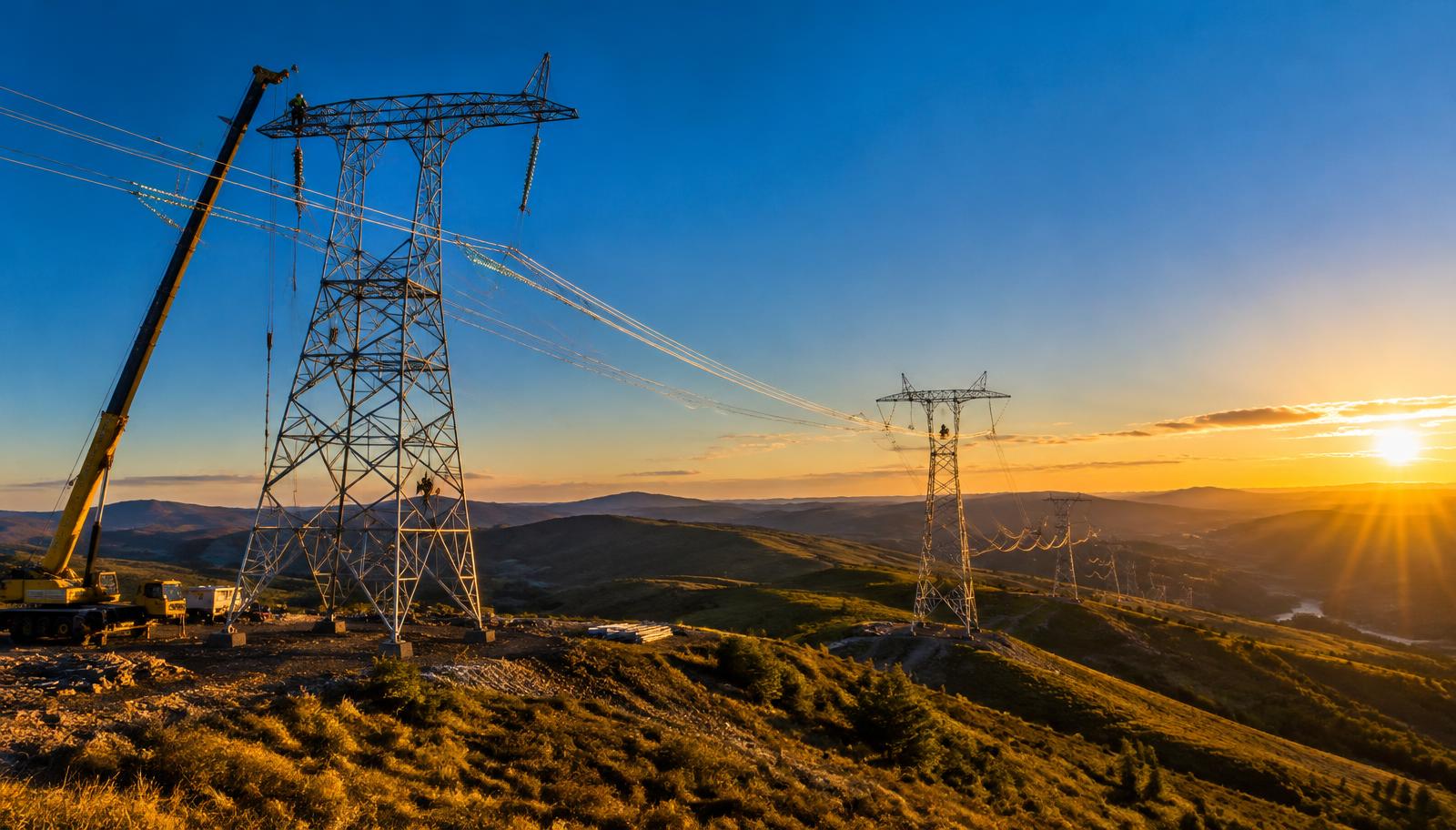
The U.S. power grid is in the midst of an unprecedented transformation. Unrelenting electricity demand, driven by historic manufacturing investments and the exponential growth of data centers, is colliding with a massive influx of new generation resources. Finding a way to connect this new power while maintaining reliability requires a unique and highly sought-after professional: the transmission project manager. This role has become one of the most critical fulcrums in the energy transition. For hiring leaders at utilities, developers, and data center operators, identifying the right candidate is not just about filling a seat. It is about securing the strategic leadership needed to navigate extreme complexity and deliver projects essential to national economic and energy security. The skills that define a top-tier candidate go far beyond a simple certification; they reflect a deep, multidisciplinary mastery of the modern power industry.
The New Landscape of Grid Expansion
The scale of the challenge is staggering. According to Berkeley Lab's "Queued Up" report, over 2,060 gigawatts of generation and storage capacity are actively seeking connection to the grid. This surge is met by a parallel boom in construction. The U.S. Energy Information Administration reports that 53 GW of new capacity were added in 2025, the largest annual increase since 2002, with developers planning a record 86 GW for 2026. Solar and battery storage projects dominate these plans. This growth is compounded by new load centers with immense power needs. Data centers could account for 11.8% of total U.S. electricity by 2030, a significant jump from about 4.4% in 2023, as noted in Berkeley Lab's United States Data Center Energy Usage Report. After a decade of flat growth, U.S. electricity consumption has risen approximately 7% since 2020, based on Wood Mackenzie data. This environment demands project leaders who can manage not just one project, but a portfolio of complex, interconnected initiatives under immense schedule and resource pressure.
“The demand for a skilled transmission project manager is soaring. Learn the technical, commercial, and leadership skills that hiring managers are seeking now.”
The Expert Transmission Project Manager: Beyond the PMP
A Project Management Professional (PMP) certification is a valuable baseline, demonstrating a grasp of process and methodology. For a top-tier transmission project manager, however, it is merely the starting point. Elite candidates possess deep technical acumen rooted in electrical engineering. They understand the fundamentals of substation design, protection and control schemes, and the engineering trade-offs between overhead and underground transmission lines. This knowledge allows them to intelligently question engineering consultants, identify potential design flaws early, and foresee constructability issues before they impact the schedule and budget. The Bureau of Labor Statistics projects that employment for electrical engineers in the electric power sector will grow by about 13% between 2025 and 2035, a reflection of this need for technical depth. A great project manager does not need to be the lead design engineer, but they must speak the language fluently and command the respect of their technical teams. They translate complex engineering challenges into project risks and mitigation strategies that executive leadership can understand.
Navigating the Interconnection Maze
Getting a project built is one challenge; getting it connected to the grid is another entirely. The interconnection process is a labyrinth of technical studies, regulatory filings, and complex negotiations. Berkeley Lab's research highlights this bottleneck, finding that most projects that apply for interconnection are ultimately withdrawn and that completed projects are taking longer to navigate the study process and reach operation. A superior transmission project manager has lived this process. They have a working knowledge of RTO and ISO tariffs and have successfully guided projects through the phases of system impact studies, facilities studies, and the negotiation of Interconnection Agreements. They know the key decision points and the long-lead items within the queue process itself. This expertise allows them to build realistic project schedules, anticipate utility requirements, and proactively address study results that could otherwise derail a project's financial viability.
Mastering the Supply Chain Challenge
In recent years, procurement has evolved from a transactional task to a primary strategic risk. A top project manager is, above all, a supply chain strategist. The grid expansion has created severe shortages for critical components. A Wood Mackenzie report from August 2025 quantified supply deficits of 30% for power transformers and noted that U.S. demand for these units has increased 116% since 2019. With roughly 80% of the U.S. supply being imported, the risks of geopolitical tension, shipping delays, and cost volatility are acute. The best candidates have a proven track record of managing these long-lead items. They initiate procurement for transformers, circuit breakers, and specialized steel structures at the earliest possible stage of project development. They cultivate relationships with a global network of manufacturers and suppliers, and they have contingency plans for sourcing and logistics. They do not simply track purchase orders; they actively manage supply chain risk from project inception to final delivery.
The Financial and Contractual Strategist
Transmission projects represent significant capital investments, often running into the hundreds of millions of dollars. The project manager is the primary steward of this capital. This requires a sophisticated command of financial controls. Top candidates are adept at developing detailed, bottoms-up budgets, implementing rigorous cost-tracking systems, and performing scenario analysis to forecast potential overruns. They are masters of change order management, able to distinguish between legitimate scope changes and contractor claims. This financial acumen is paired with contractual expertise. A premier project manager is deeply involved in negotiating EPC (Engineering, Procurement, and Construction) contracts, ensuring that risk is allocated appropriately and that performance guarantees are robust. They understand the nuances of contract language and can effectively manage contractor relationships to ensure alignment with the project's financial and schedule goals.
Leading People and Stakeholders
Technical and financial skills are incomplete without strong leadership. Transmission lines and substations are highly visible projects that cut across communities, impacting landowners, local governments, and environmental interests. An effective project manager is a skilled communicator and diplomat who can manage these diverse stakeholder relationships. They anticipate community concerns and work with outreach teams to build consensus and mitigate opposition. Internally, they must lead and inspire a multidisciplinary team. The energy workforce is also in transition. A 2023 survey from CEWD/ScottMadden found that 56% of utility employees have less than ten years of service. A Goldman Sachs Research estimate cited by Exelon's CEO suggests the U.S. power sector may need around 750,000 additional workers by 2030. In this environment, a top PM is also a mentor, developing talent within their team and building a sustainable project execution capability. They foster a culture of accountability, safety, and excellence.
Integrating Security and Compliance
A final differentiator for elite candidates is a working knowledge of critical infrastructure protection standards. The NERC CIP standards, specifically CIP-002 through CIP-014, establish mandatory cybersecurity and physical security requirements for the bulk electric system. Non-compliance can result in significant financial penalties and operational risk. A forward-thinking transmission project manager ensures that these requirements are designed into the project from the beginning, not treated as an add-on during commissioning. They work with security experts to integrate physical security measures at substations and ensure that all networked control systems meet stringent cybersecurity protocols. This proactive approach to compliance de-risks the project and ensures the long-term security and reliability of the asset once it enters operation.
Finding a single individual with this comprehensive blend of technical depth, commercial acumen, regulatory savvy, and leadership is the core challenge for any organization building power infrastructure today. The traditional project manager who simply tracks a schedule is no longer sufficient. The market demands a strategic business leader who can navigate unprecedented complexity and deliver critical assets on time and on budget. The success of the energy transition depends on them.
For hiring leaders, identifying and attracting this caliber of professional requires a specialized approach. GridTal’s retained-only executive and technical search process is designed to connect you with qualified, pre-vetted leaders who possess the specific skills to drive your transmission projects forward. To learn more, visit our Request Talent page.
If you are a senior project leader whose experience reflects the skills outlined here, the market for your talent has never been stronger. We invite you to discreetly submit your Resume to be considered for exclusive opportunities with the nation's leading power infrastructure builders.
Sources
Berkeley Lab "Queued Up" (June 2026 edition, data through end of 2025); Berkeley Lab United States Data Center Energy Usage Report: 2025 Update (June 2026); BLS Occupational Outlook Handbook; EIA; Wood Mackenzie/ACP; Wood Mackenzie (Aug 2025); Goldman Sachs Research estimate (cited by Exelon CEO, 2026); CEWD/ScottMadden 2023 Energy Workforce Survey; NERC CIP standards.
Related reading
See our transmission recruiting practice and the transmission engineer role guide. Candidates can submit a Resume.