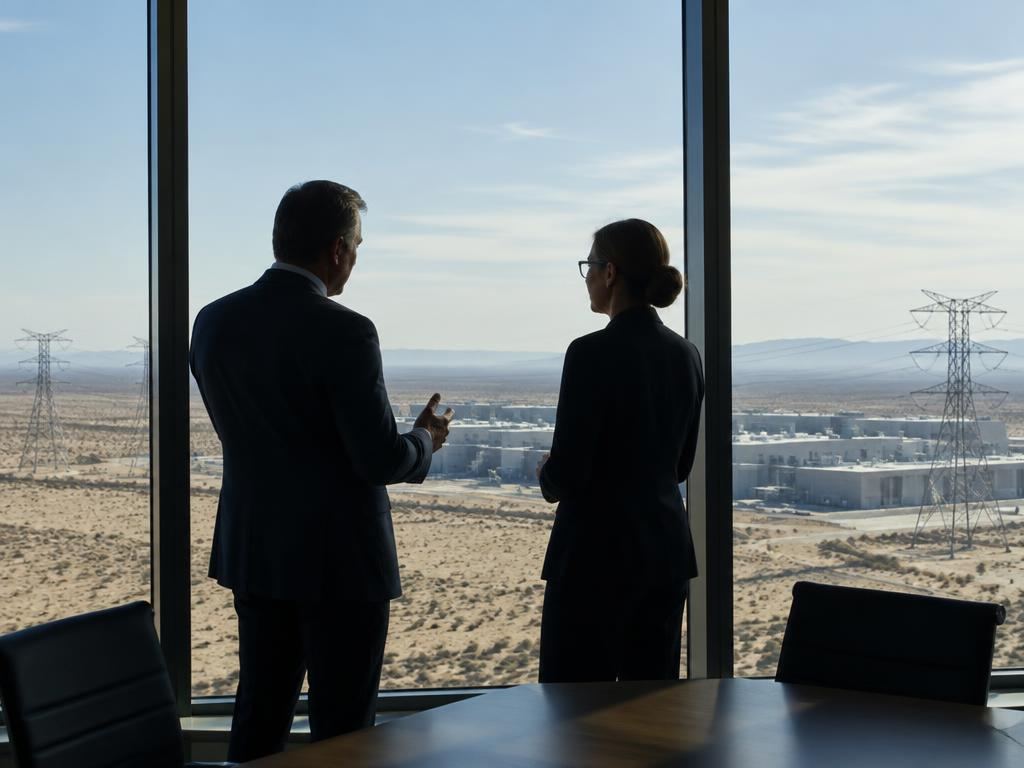
Grid timelines are pushing developers toward onsite generation as a bridge or as permanent supply.
Bridge to grid
Temporary and phased generation lets campuses energize years ahead of grid upgrades.
“Onsite generation is moving from backup to primary supply.”
New skill sets
Air permitting, fuel supply and turbine operations are new territory for many data center teams.
Technology options
Developers are deploying aeroderivative and industrial gas turbines, reciprocating engines, fuel cells and battery storage, often in combination. Each has different efficiency, emissions, ramp and maintenance profiles, so design depends on whether generation is a bridge, a backup or the permanent supply.
Permitting and fuel
Air permits, gas pipeline capacity and fuel contracts set the timeline for most onsite projects. Teams need environmental and fuel supply expertise that traditional data center groups rarely have.
Grid integration
Many campuses plan to start on onsite generation and transition to grid service later, or run both together. That raises complex questions about protection, controls, market participation and utility agreements.
Who to hire
Generation development managers, turbine project engineers, plant operators and environmental specialists from IPPs and utility-scale developers are in heavy demand. Experience bringing projects to commercial operation is the strongest predictor of success.
The skills behind onsite generation
Onsite generation programs pull from a different talent pool than traditional data center development. Teams need turbine and reciprocating-engine specialists, air permitting experts, fuel supply and pipeline negotiators, and operators who have run plants under strict reliability targets. Many of these professionals come from independent power producers, utilities and the oil and gas sector.
Where the competition is
Turbine manufacturers are sold out for years, and the engineers who know how to procure, install and commission that equipment are in equally short supply. Developers that move first on talent often secure better equipment slots too, because experienced leaders bring supplier relationships with them.
Bridge power and the long view
Most operators see onsite gas as a bridge to grid power, not a permanent replacement. The best hires understand both worlds: how to stand up generation quickly, and how to plan the transition to utility service, storage or cleaner fuels once the grid catches up.